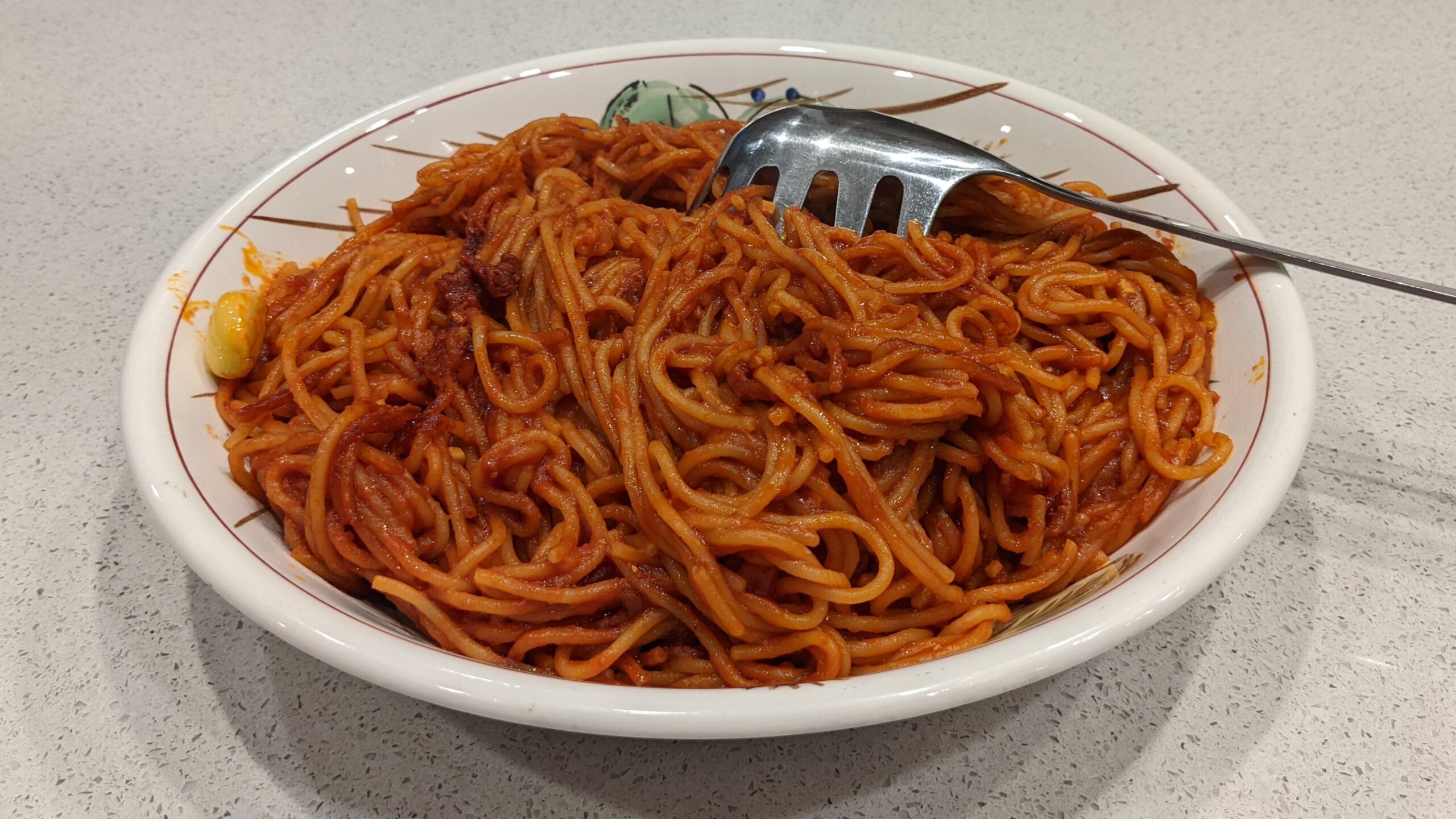
Ingredients
Method
- Remove 150 g of passata from the bottle and reserve.
- Combine the remaining passata with the water, tomato paste and salt to make a tomato “broth”. Bring to a simmer on low heat. Use some of the water to rinse out the jar to remove all the passata.
- Meanwhile heat the olive oil in a large sauté pan, preferably one that is large enough in diameter to hold the spaghetti flat. Add the minced and whole garlic and sauté until fragrant.
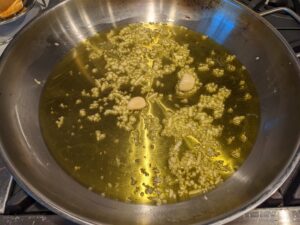
- Add hot pepper, sauté briefly.
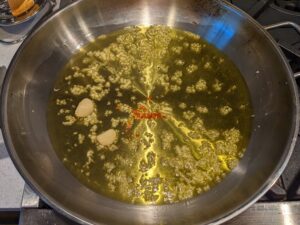
- Add the reserved passata and sugar.
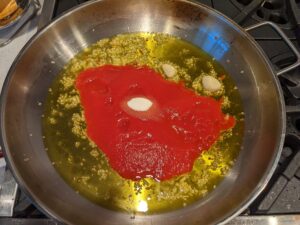
- Cook until much of the liquid has evaporated and the passata has darkened somewhat.
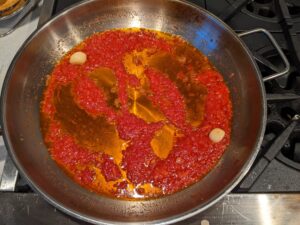
- Add the spaghetti, fanning it out. Add a ladle or two of the broth and cook on brisk heat until almost completely absorbed, frequently pushing the spaghetti around to keep it from sticking together.
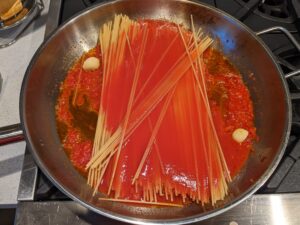
- Proceed in this way, adding broth a bit at a time and occasionally turning the spaghetti over, until it is al dente. During this time, you should begin to notice the fragrance change toward more caramel notes.
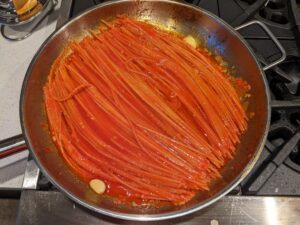
- During the last few minutes, allow the pasta to sizzle enough to create some very dark spots. Note, if there is not enough broth, bring some water to a simmer and finish cooking the pasta with that.
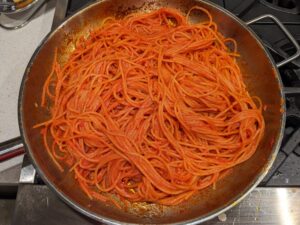
- Off heat, add Pecorino and more liquid if necessary to create a bit of sauce.
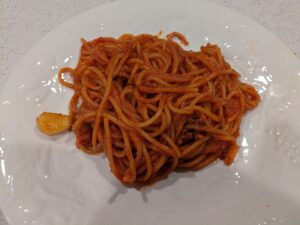
- Drizzle each serving with some additional extra-virgin olive oil and pass more grated Pecorino at the table.
Notes
Copyright © 2024 by Villa Sentieri, LLC. All rights reserved.